Compassion, Purpose, and Wonder
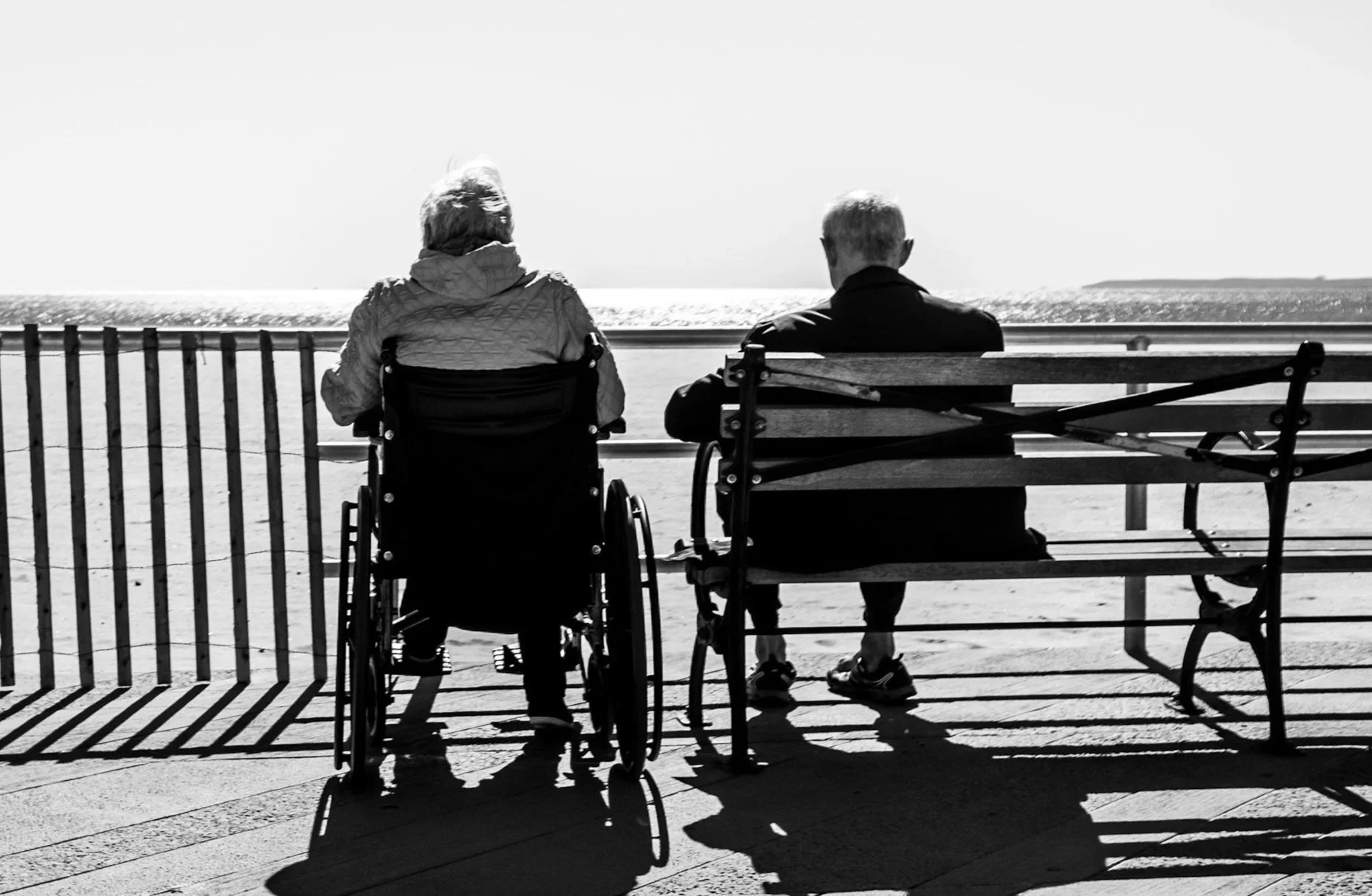
"For we are His workmanship, created in Christ Jesus for good works, which God prepared beforehand." Ephesians 2:10
There have been many moments over the past several years when I've found myself sitting in a doctor's office, waiting for another appointment, another test result, or another conversation about what my body could no longer do.
It's strange what comes to mind in waiting rooms.
My thoughts often drift back to a high school classroom.
In my last post, I shared the story of Mrs. Dudley, the teacher who awakened my fascination with the remarkable complexity of the human body. At the time, I simply thought I had discovered a subject I loved. I had no idea God was quietly preparing me for a journey I never would have chosen.
That preparation extended far beyond textbooks.
Through a Certified Nursing Assistant program offered in partnership with our local community college, I spent my senior year learning how to care for patients. As soon as I turned eighteen, I accepted a job in home healthcare. I imagined it would be a stepping stone toward a career in medicine.
Looking back now, I realize it became something much greater.
As I studied anatomy and physiology, I became captivated by the extraordinary design of the human body. The more I learned, the more I stood in awe of God's creation.
"I praise You, for I am fearfully and wonderfully made." Psalm 139:14
When chronic illness eventually became part of my own story, I didn't lose that sense of wonder. If anything, it grew deeper. Instead of seeing my body only through the lens of disease, I could still marvel at its beauty, complexity, and intentional design. Studying the body taught me to appreciate its remarkable intricacy; living with chronic illness taught me to appreciate even more the wisdom and goodness of the One who designed it.
But perhaps the greatest lessons God had for me weren't found in a classroom.
They were found in the homes of the people I cared for.
Compassion
One of my first patients was a teenage girl.
She was my age.
A tragic car accident had left her permanently disabled. The life she had imagined was gone in an instant.
As an eighteen-year-old, I naturally noticed her suffering.
It took longer to notice her parents'.
I was there to provide medical care for her so they could leave the house for a few hours, to buy groceries, attend doctor's appointments, run errands, or simply breathe. Their days revolved around caring for their daughter, a responsibility they carried with remarkable tenderness and unwavering devotion.
As I watched them, I often wondered about the dreams they had quietly laid down. The milestones they would never celebrate. The future they had once imagined for their daughter that would never come to pass.
They never stopped loving her.
They simply learned to love her differently.
At eighteen, I thought I was learning how to care for a patient.
Looking back, I see that God was teaching me something equally important: to see the invisible weight carried by those who love someone who suffers.
Years later, when my own husband quietly stepped into the role of caregiver, those memories returned with new clarity.
I came to understand that illness is rarely carried by one person alone. It touches an entire family.
It asks more of everyone.
It requires patience when plans change, grace when emotions run thin, compassion for struggles that cannot always be seen, and a willingness to love in ways no one ever expected.
While I would never have chosen this road for the people I love, I have watched God use it to shape each of us. It has taught us not to take ordinary days for granted. It has deepened our empathy for others who are hurting. It has reminded us that love is often expressed not in grand gestures, but in countless quiet acts of faithfulness that no one else ever sees.
Looking back, I no longer see only what illness took from that family, or from mine.
I also see what God lovingly grew within us because of it.
Purpose
Another patient lived alone.
He was quadriplegic and required twenty-four-hour care. Every part of his day demanded extraordinary effort. Before he could leave his apartment, someone had already helped him out of bed, bathe, dress, eat, and settle into his wheelchair. What many of us accomplish almost without thinking often required hours of planning and perseverance.
It would have been understandable if he had chosen to stay home.
If he had withdrawn from relationships.
If he had decided the effort simply wasn't worth it.
Instead, he chose to live.
He pursued his education. He cultivated friendships. He invested in his community. He welcomed people into his life with warmth, humor, and genuine interest. Every outing required determination. Every conversation cost him more energy than most people would ever realize. Yet he continued to show up.
Looking back now, I realize he was quietly dismantling ideas about disability that I didn't even know I held.
Before meeting him, I had never stopped to consider that a life marked by significant physical limitations could also be marked by such joy, generosity, and intentionality. His disability affected everything he did, and yet, he continued to invest in people, pursue growth, and live with quiet determination.
Years later, when chronic illness began changing what my own body could do, I often thought of him. He had shown me long before I needed the reminder that our limitations may change the way we live, but they never change the value of the life God has given us.
I remembered how easy it would have been for him to retreat from the world.
And I remembered that he chose not to.
His life became a reminder when I was faced with similar choices.
I could allow my limitations to define the boundaries of my life.
Or I could continue seeking purpose within them.
"Though our outer self is wasting away, our inner self is being renewed day by day." 2 Corinthians 4:16
Wonder
Then there was the artist.
She lived alone and needed help with the ordinary tasks that age had made difficult, but those practical moments are not what I remember most.
I remember lingering over cups of tea.
Listening to stories.
Admiring the paintings that filled her home.
Many days I felt less like her healthcare worker and more like a companion.
She had a way of seeing the world that was unlike anyone I had ever known.
She noticed beauty where others hurried past it.
The changing light spilling across the room.
The movement of marsh grass in the breeze.
The quiet reflection of water.
The countless colors hidden within what most people would simply call "green."
She taught me that wonder isn't reserved for mountaintop moments. It is found in the ordinary if we are willing to slow down long enough to notice.
In a world that constantly urges us to do more, move faster, and fill every quiet moment, she showed me the gift of simply being present. Sitting together in silence never felt awkward. It felt restful. She seemed to understand something I was only beginning to learn, that there is comfort in stillness and that some of God's greatest gifts are discovered not while rushing through life, but while quietly marveling at His creation.
"Whatever is true, whatever is honorable, whatever is just, whatever is pure, whatever is lovely... think about these things." Philippians 4:8
One of her paintings, a peaceful scene of Beaufort, North Carolina, with its wild horses, still hangs in my home today. Every time I walk past it, I think of her, not simply because she was a gifted artist, but because she taught me to see.
Years later, when chronic illness forced my life to become quieter than I had ever imagined, I found myself returning to those lessons. God met me in stillness. He reminded me of His presence through beauty. Art became more than a creative outlet; it became a form of worship, prayer, and healing.
That, perhaps, is a story for another day.
Looking Back
When I think about those years now, I realize I wasn't simply caring for patients.
God was shaping me through them.
He knew the road that laid ahead and He surrounded me with people who quietly dismantled the lies we so often believe about suffering.
They taught me that disability never diminishes dignity.
That illness never erases purpose.
That weakness never changes a person's worth because God has never measured our lives by our abilities, but by His unfailing love for us.